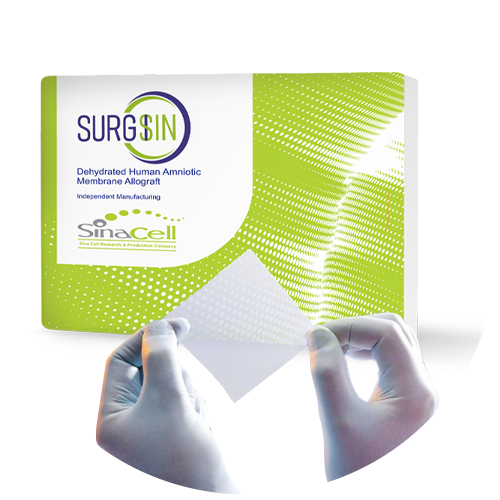
SurgiSin®
Dehydrated Human Amniotic Membrane Allograft
Description:
SurgiSin® is a dehydrated human amniotic membrane allograft designed to prevent post-surgical adhesions and enhance healing. Produced through a proprietary dehydration process, SurgiSin® retains the biological properties of the amniotic membrane, including anti-inflammatory, anti-fibrotic, anti-microbial, and pro-regenerative effects.
Biological Properties of Amniotic Membrane
- Anti-inflammatory and immunomodulatory
- Anti-fibrotic and anti-scarring
- Anti-microbial activity
- Promotion of epithelialization and wound healing
- Low immunogenicity
- Natural barrier to infection
- Rich in growth factors such as EGF, TGF-β, FGF, and VEGF
Manufacturing Process:
The amniotic membrane is collected from healthy, consenting donors following elective cesarean sections under aseptic conditions. Each donor undergoes rigorous screening, including serological and Real-Time PCR, ELISA testing for infectious diseases. The membrane is cleaned, processed, and dehydrated in GMP-certified cleanrooms to preserve its natural structure and bioactivity. Sterility and quality are confirmed through extensive microbial, endotoxin, and mycoplasma testing before release.
Indications
Obstetrics & Gynecology:
- Cesarean section: Enhancing uterine incision healing and reducing postoperative pain
- Myomectomy: Preventing postoperative adhesions and supporting fertility preservation
- Hysterectomy: Promoting vaginal cuff healing and minimizing pelvic adhesions
- Bartholin cyst surgery: Reducing recurrence and enhancing epithelialization
- Vaginoplasty and vaginal reconstruction: Promoting epithelial healing and preventing fibrosis
- Endometriosis surgery: Reducing postoperative adhesion formation
- Vulvar cancer surgery (vulvectomy): Accelerating wound healing and improving cosmetic outcomes
- Chronic cervicitis: Adjunct treatment to reduce inflammation and support cervical healing
- Intrauterine adhesions (Asherman’s syndrome): Prevention of recurrence after hysteroscopic adhesiolysis
- Cervical necrotizing fasciitis: Supporting tissue regeneration in severe cervical infection
General Surgery:
- Prevention of intra-abdominal adhesions after laparotomy or laparoscopy
- Wound healing enhancement in acute and chronic surgical wounds
- Prevention of postoperative adhesions after abdominal or pelvic surgeries
- Burn and trauma management, especially in full-thickness or non-healing wounds
- Treatment of diabetic foot ulcers and other chronic non-healing ulcers
- Coverage of exposed tendons, bones, or nerves in complex wounds
- Hernia repair: applied as an adjunct to mesh to reduce adhesions and enhance tissue integration
- Plastic and reconstructive surgery: for soft tissue regeneration and scar modulation
- Colorectal surgery: prevention of pelvic adhesions and anastomotic complications (experimental)
- Post-mastectomy or breast reconstruction wounds to reduce fibrosis and improve healing
- Perineal wound coverage after abdominoperineal resection or trauma
- Pancreatic anastomosis
- Dystrophic epidermolysis bullosa
- Colorectal and intestinal anastomoses
- Wound Dressing for Split-Thickness
- Hard-to-Heal Wounds
- Skin Tissue Engineering and Regenerative Medicine
- Acute Abdominal Wall Dehiscence
- Colostomy Reversal
- Colovesical Fistula Repair
Orthopedic Surgery:
- Tendon and ligament repair (e.g., rotator cuff, Achilles’ tendon): to reduce postoperative adhesions and improve gliding function
- Nerve repair and neurolysis: as a biological wrap to minimize scarring and support axonal regeneration
- Joint surgeries (e.g., knee, shoulder, hip): to reduce inflammation and promote synovial healing
- Bone defects and grafting sites: to support osteogenesis and soft tissue integration
- Spinal surgery: as an anti-adhesion barrier after laminectomy or discectomy
- Fracture repair: in complex or non-union cases to enhance healing
- Cartilage repair and regeneration: in experimental or biologic reconstruction procedures
- Diabetic foot and pressure ulcer management: especially when involving exposed bone or tendon
- Postoperative wound healing: to accelerate epithelialization and reduce infection risk
Other Specialties:
- Neurosurgery: Dural substitute, reduction of scar formation around nerves
- Plastic and Reconstructive Surgery: Coverage of skin defects, prevention of hypertrophic scars
- Burn Care and Wound Management: Treatment of chronic wounds, diabetic ulcers, and burn injuries
- ENT (Ear, Nose, and Throat): Tympanic membrane repair, sinus surgeries
- Urology: Urethral and bladder surgeries to prevent fibrosis
Key Therapeutic Features:
- Accelerates wound healing by promoting epithelial cell migration and proliferation
- Reduces inflammation and scar tissue formation
- Provides a biological barrier against infection
- Enhances angiogenesis and tissue regeneration
- Minimizes pain and post-surgical fibrosis
- Dehydrated and ready-to-use
- Flexible and suitable for suturing
- Sterile and safe
Instructions for Use
Important – Pre-Placement Considerations:
- Treat Active Infection: Any active infection must be fully treated and resolved before SurgiSin® application
- Remove Necrotic or Excess Tissue (Debridement): Perform complete surgical debridement to eliminate all necrotic, fibrotic, or devitalized tissue
- Control Bleeding or Discharge: Ensure complete hemostasis and manage any active discharge before applying SurgiSin®
Application Instructions:
- Open Packaging:
- Carefully open the outer (non-sterile) packaging
- Place the sterile inner packaging onto a sterile field
- Prepare for Application:
- Wear sterile gloves
- Open the inner sterile package carefully (Note: SurgiSin® is extremely lightweight and sensitive to air movement)
- Handle SurgiSin® Properly:
- Use fine, non-toothed, sterile forceps to gently pick up SurgiSin®
- Prepare the Application Site:
- If the application site is dry, lightly moisten it with sterile normal saline
- Avoid excessive wetting
- Size Adjustment (If Needed):
- SurgiSin® can be trimmed with sterile scissors or cutting instruments to the desired size and shape
- Placement:
- Place SurgiSin® directly over the target area
- For internal use, secure it with sutures or tissue adhesive
- For external use, cover with sterile Vaseline gauze
- Dressing and Securing (for External Applications):
- After placing SurgiSin® and Vaseline gauze, apply waterproof adhesive dressings to maintain a moist environment and protect the graft
Storage and Handling
- Store at ambient temperature in a dry, clean environment
- Shelf life: Up to 5 years from the date of manufacture
- Do not use if the package is damaged or compromised
Available Sizes
- 5 cm x 5 cm
- 10 cm x 10 cm
- Custom sizes available upon request
Precautions and Warnings
- SurgiSin® must only be used by trained healthcare professionals
- Ensure appropriate patient consent and understanding prior to use
- Do not use in the presence of active infection
- Not intended for use in individuals with known hypersensitivity to amniotic tissue
- Discard any unused, rehydrated grafts