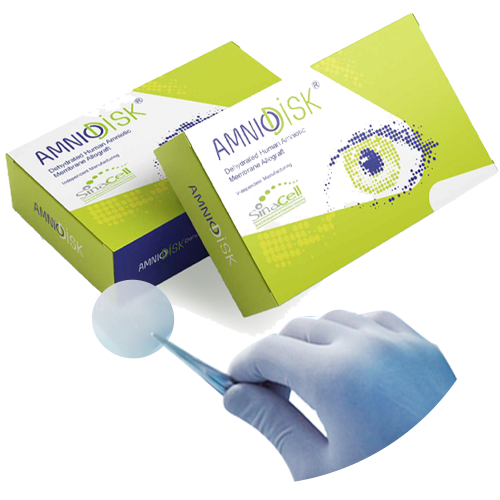
AmnioDisk®
Dried Human Amniotic Membrane Allograft for Ophthalmic Use
Description:
AmnioDisk® is a dehydrated allograft derived from the human amniotic membrane, specifically designed for ophthalmic applications. Each AmnioDisk® has a diameter of 18 mm, making it ideal for covering a wide range of ocular surface defects.
Biological Properties of Amniotic Membrane
- Anti-inflammatory and immunomodulatory
- Anti-fibrotic and anti-scarring
- Anti-microbial activity
- Promotion of epithelialization and wound healing
- Low immunogenicity
- Natural barrier to infection
- Rich in growth factors such as EGF, TGF-β, FGF, and VEGF
Manufacturing Process:
The amniotic membrane is collected from healthy, consenting donors following elective cesarean sections under aseptic conditions. Each donor undergoes rigorous screening, including serological and Real-Time PCR, ELISA testing for infectious diseases. The membrane is cleaned, processed, and dehydrated in GMP-certified cleanrooms to preserve its natural structure and bioactivity. Sterility and quality are confirmed through extensive microbial, endotoxin, and mycoplasma testing before release.
Indications
Corneal Surface Reconstruction:
- Persistent epithelial defects (PED)
- Non-healing corneal ulcers
- Neurotrophic keratitis (NK)
- Microbial keratitis (MK), including bacterial, fungal, and viral (e.g., herpetic) keratitis
- Severe or refractory dry eye disease (DED)
- Chemical and thermal ocular surface burns
- Bullous keratopathy
- Recurrent corneal erosion (RCE)
- Post-photorefractive keratectomy (PRK) epithelial healing
- Corneal perforations and stromal thinning
- Limbal stem cell deficiency (LSCD), including post-limbal stem cell transplantation
Conjunctival Surface Reconstruction:
- Pterygium excision surgery
- Conjunctival defects (traumatic or surgical)
- Cicatrizing conjunctivitis (e.g., Stevens-Johnson syndrome, ocular cicatricial pemphigoid)
- Conjunctival neoplasia (e.g., ocular surface squamous neoplasia)
- Refractory conjunctivochalasis (CCH)
- Symblepharon release and fornix reconstruction
Supportive Use in Ocular Surgery and Pain Management:
- Adjunctive support in glaucoma surgery (e.g., trabeculectomy, drainage device implantation)
- Oculoplastic surgeries involving the ocular surface
- Promotion of postoperative wound healing and inflammation control
- Relief of ocular surface pain due to epithelial defects, lid friction, or exposure keratopathy
Retinal disorders:
- To aid in the closure of recurrent macular holes, post-traumatic chronic macular holes, and recurrent macular holes in pathological myopia
- To promote the repair of retinal breaks
Key Therapeutic Features:
- Accelerates wound healing by promoting epithelial cell migration and proliferation.
- Reduces inflammation and scar tissue formation.
- Provides a biological barrier against infection.
- Enhances angiogenesis and tissue regeneration.
- Minimizes pain and post-surgical fibrosis.
- Dehydrated and ready-to-use
- Flexible and suitable for suturing
- Sterile and safe
Instructions for Use
Preparation:
- Open the sterile packaging carefully.
- Using sterile forceps, handle AmnioDisk® without touching it directly.
- Ensure the orientation by identifying the epithelial (amniotic) side “p” and stromal side “q”
Placement as a Graft:
- Place the amniotic (epithelial) side up and the stromal side down facing the ocular surface.
- The engraved letter should appear as “p”.
- Secure the membrane using sutures (non-absorbable, 10-0 nylon or similar), fibrin glue, or a bandage contact lens.